

When Should a Business Hire a Bookkeeper?
Most growing businesses benefit from hiring a bookkeeper once financial transactions become difficult to manage consistently, financial reports fall behind, or owners no longer have clear visibility into profitability and cash flow.
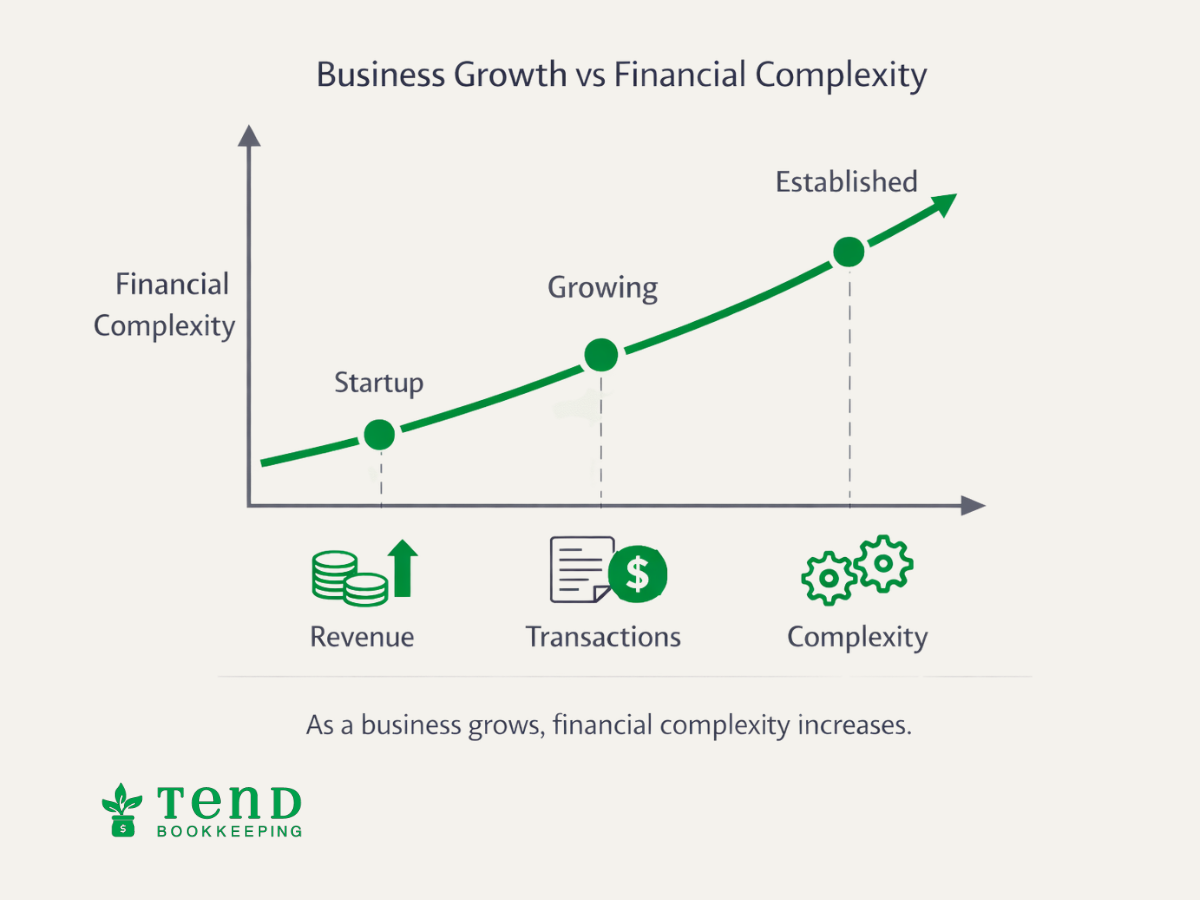
As businesses grow, bookkeeping becomes more complex. Transaction volume increases, expenses become harder to track, and accurate financial reporting becomes essential for making informed decisions.
Professional bookkeeping ensures financial records remain organized and reliable so business owners can clearly understand how their company is performing.
Quick Answer
Businesses typically hire a bookkeeper when financial tasks begin taking too much time, accounts are not reconciled regularly, or financial reports are no longer up to date.
Professional bookkeeping helps maintain accurate financial records and provides business owners with reliable financial information for decision-making.
How Does Bookkeeping Become More Complex as a Business Grows?
In the early stages of a business, bookkeeping may involve only a small number of monthly transactions. Many owners manage this themselves using basic accounting software.
As revenue grows, financial activity becomes more complicated. A growing business may need to manage:
- higher sales volume
- multiple bank and credit card accounts
- payroll and employee expenses
- vendor payments and subscriptions
- loan payments or equipment financing
With more transactions and financial responsibilities, maintaining accurate records requires consistent attention and structured processes.
Without regular bookkeeping, financial information can quickly become outdated or unreliable.
What Are the Signs It May Be Time to Hire a Bookkeeper?
Many business owners realize they need bookkeeping support when financial records begin falling behind.
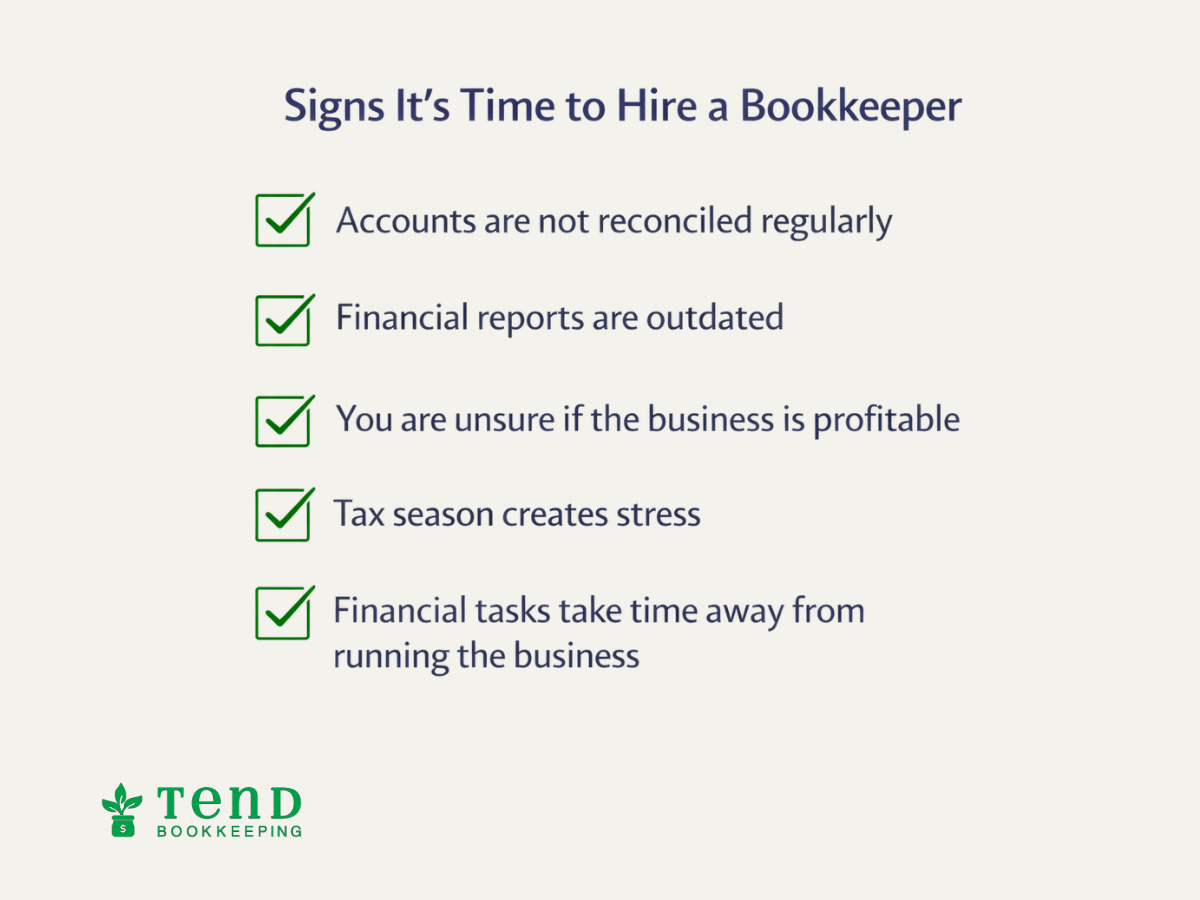
Common signs include:
- bank or credit card accounts that have not been reconciled recently
- financial reports that are outdated or unavailable
- uncertainty about whether the business is truly profitable
- confusion about cash flow or expenses
- stress and last-minute preparation during tax season
When bookkeeping is inconsistent, business owners may struggle to make confident financial decisions.
What Does a Bookkeeper Actually Do?
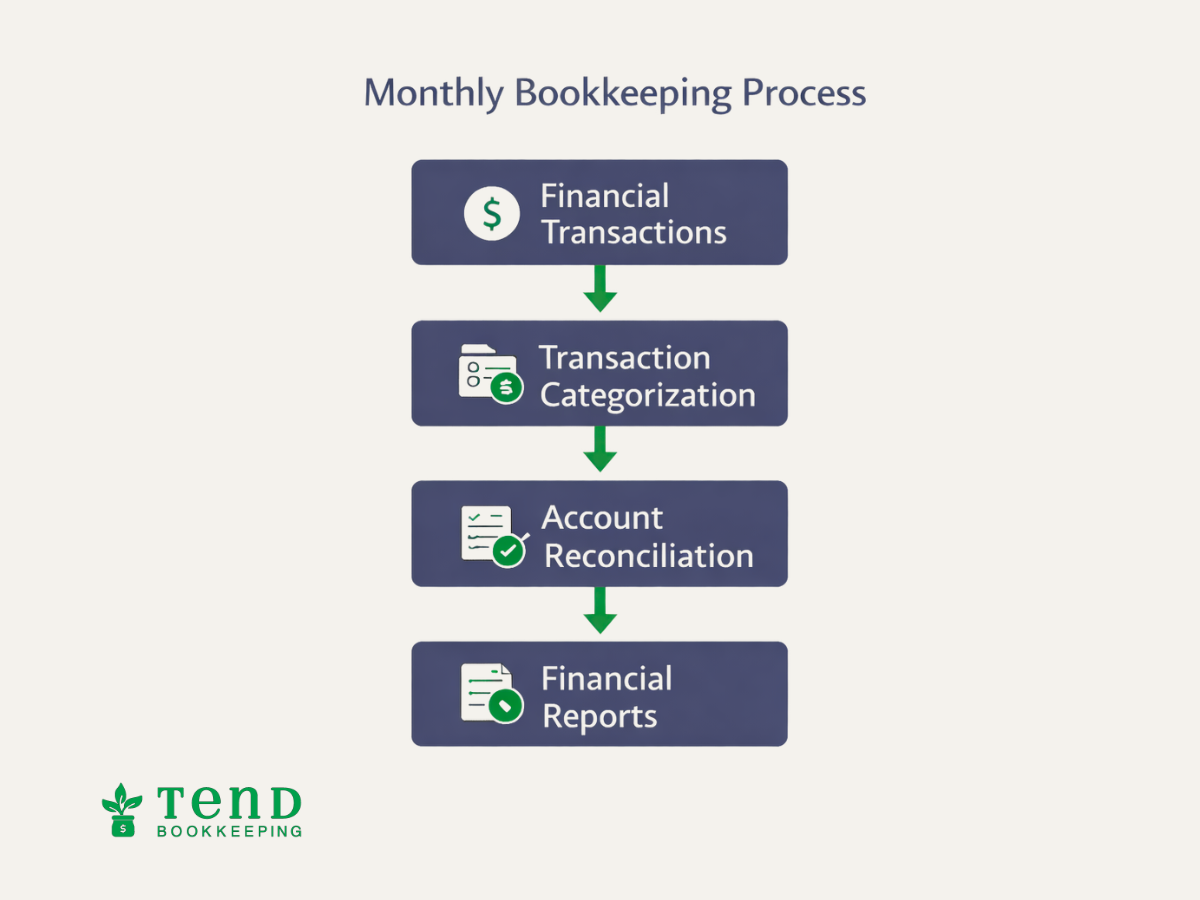
Bookkeeping is the process of recording and organizing a business’s financial transactions. This ensures that financial records accurately reflect income, expenses, and the overall financial position of the business.
Professional bookkeeping typically includes:
- categorizing income and expenses
- reconciling bank and credit card accounts
- reviewing financial transactions for accuracy
- preparing financial reports such as profit and loss statements
- organizing records for tax preparation
These activities help maintain accurate financial records that business owners and accountants can rely on.
What Changes When You Hire a Professional Bookkeeper?
When bookkeeping is handled consistently and accurately, business owners gain a clearer view of their company’s financial health.
Reliable financial records make it easier to:
- monitor profitability
- manage expenses
- track cash flow
- prepare for tax season
- communicate effectively with accountants and advisors
Instead of spending time trying to organize financial records, business owners can focus on running and growing their business.
Practical Example
For example, a business generating $750,000 in annual revenue may process hundreds of financial transactions each month. These can include customer payments, payroll expenses, vendor invoices, software subscriptions, and loan payments.
Without consistent bookkeeping, it becomes difficult to determine whether the business is truly profitable or where money is being spent.
Professional bookkeeping ensures these transactions are recorded and organized so financial reports accurately reflect how the business is performing.
Key Takeaways
- Bookkeeping often becomes more complex as businesses grow.
- Falling behind on financial records can create confusion and stress.
- Professional bookkeeping helps ensure financial transactions are recorded accurately.
Clear financial reports allow business owners to make more informed decisions.
FAQ
Do all businesses need a bookkeeper?
Not every business requires a bookkeeper in its earliest stages. However, as transaction volume increases and financial reporting becomes more important, many businesses benefit from professional bookkeeping support.
How often should bookkeeping be done?
Most businesses benefit from monthly bookkeeping. Regular reconciliation and reporting help ensure financial records remain accurate and up to date.
Can bookkeeping be done alongside running a business?
Some owners manage bookkeeping themselves early on, but as businesses grow, financial tasks can take significant time and attention away from running the business.
About Tend Bookkeeping
Tend Bookkeeping provides experienced, professional bookkeeping for business owners who value clarity, structure, and reliable financial reporting. With decades of real-world business ownership experience, we deliver accurate books and decision-ready insights so you can lead and grow your business with confidence.