
What Does a Bookkeeper Actually Do for a Business?
For many business owners, bookkeeping sits in a vague category: something necessary, but not entirely clear.
You know it matters. You know it needs to be done. But what a bookkeeper actually does, and why it matters to your business operations, is often misunderstood.
Bookkeeping isn’t clerical work. It’s the financial infrastructure that supports every decision you make as an owner.
Quick Answer
A professional bookkeeper is responsible for:
- Categorizing transactions accurately
- Reconciling bank and credit card accounts
- Maintaining clean, consistent financial records
- Producing reliable financial reports
- Coordinating with your CPA or tax professional
Together, these functions ensure your numbers are accurate, current, and usable.
What does transaction categorization actually involve?
Every transaction in your business needs to be assigned to the correct category: income, cost of goods sold, operating expenses, and so on.
This isn’t just data entry.
Accurate categorization determines:
- Whether your reports reflect reality
- How your cash flow is interpreted
- What your CPA sees at tax time
A professional bookkeeper applies consistency and judgment. They recognize patterns, correct misclassifications, and ensure your financial data tells the truth about your business.
When categorization is done well, your reports become meaningful. When it’s not, everything built on top of it becomes unreliable.
.png)
Why are reconciliations so important?
Reconciliation is the process of matching your internal records to your bank and credit card statements.
It answers a simple but critical question:
Do your books match reality?
Without reconciliation:
- Transactions can be missed
- Duplicates can go unnoticed
- Errors can compound over time
With regular reconciliation, your numbers are grounded in verified data. It’s how a bookkeeper ensures that your financials aren’t just organized, but accurate.
.png)
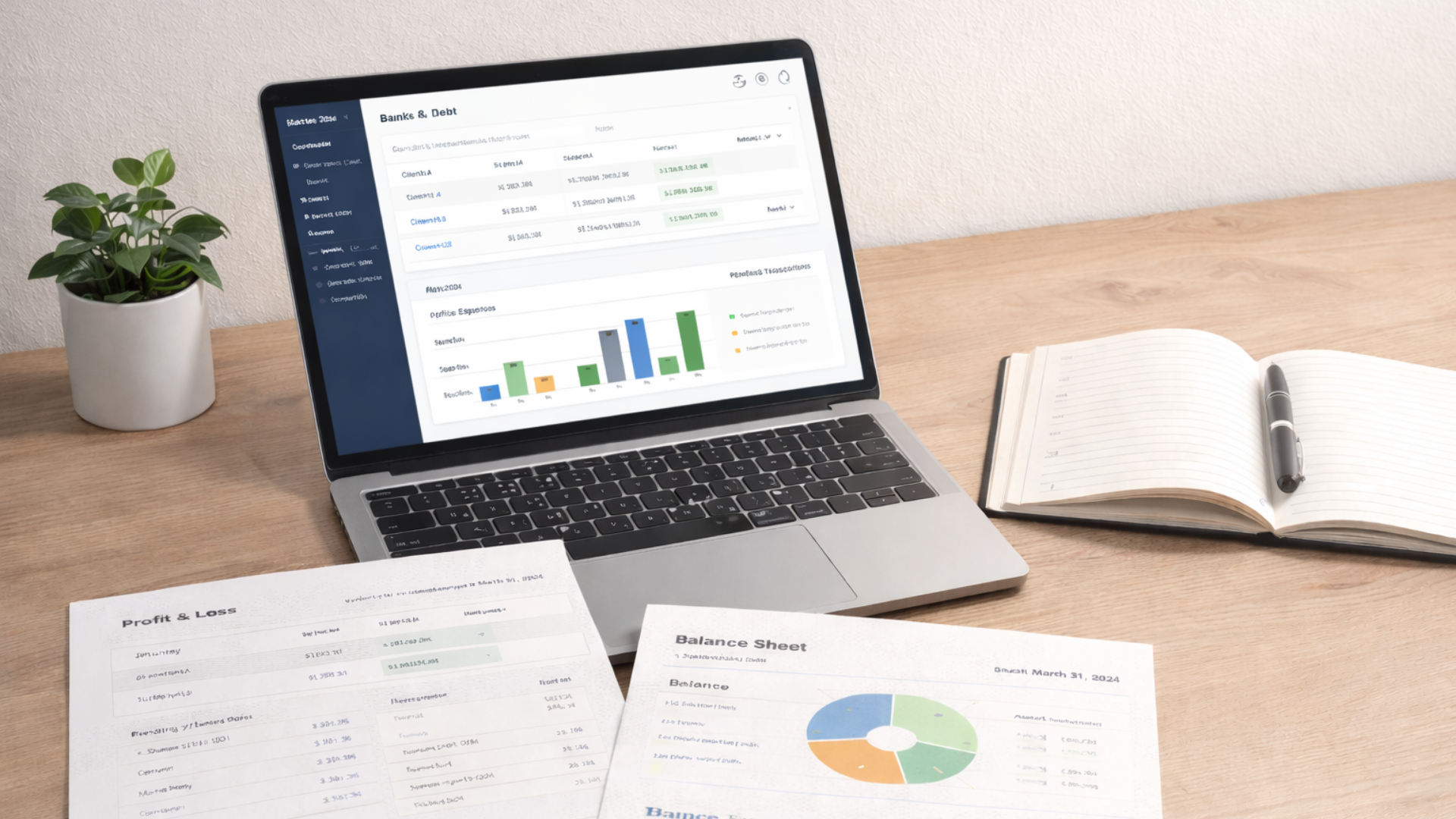
What financial reports should a bookkeeper provide?
A bookkeeper produces core reports that give you visibility into your business:
- Profit & Loss Statement - how your business is performing
- Balance Sheet - what your business owns and owes
- Cash Flow insights - how money is moving through your business
These reports aren’t just documents. They are tools.
When prepared consistently and accurately, they allow you to:
- Understand profitability
- Monitor expenses
- Make informed decisions
Without reliable reports, you’re operating on guesswork.
How does a bookkeeper work with your CPA?
A strong relationship between your bookkeeper and CPA is essential.
Your bookkeeper ensures:
- Financial records are clean and complete
- Accounts are properly categorized
- Reports are ready for tax preparation
This allows your CPA to focus on:
- Tax strategy
- Compliance
- Planning
When bookkeeping is handled well, tax season becomes significantly smoother and often less expensive.
Practical Example
Consider a business owner reviewing their Profit & Loss statement.
If transactions are miscategorized, reconciliations are incomplete, or reports are outdated, that report may show:
- Higher profit than reality
- Missing expenses
- Incorrect trends
That leads to decisions based on inaccurate information.
Now contrast that with clean books:
- Every transaction categorized correctly
- All accounts reconciled monthly
- Reports delivered consistently
The owner can trust what they’re seeing and act on it with confidence.
That’s the difference professional bookkeeping makes.
.png)
Key Takeaways
- Bookkeeping is foundational to how your business operates
- Accurate categorization ensures meaningful financial data
- Reconciliation verifies that your records match reality
- Financial reports provide clarity for decision-making
- A good bookkeeper supports your CPA and simplifies tax preparation
FAQ
Is bookkeeping just data entry?
No. While it includes recording transactions, professional bookkeeping involves judgment, consistency, and financial oversight.
How often should bookkeeping be updated?
For most established businesses, bookkeeping should be maintained monthly at a minimum.
Can I do my own bookkeeping?
Some owners start this way, but as a business grows, accuracy and consistency typically require dedicated professional oversight.
What happens if bookkeeping isn’t done correctly?
Inaccurate books lead to unreliable reports, poor decisions, and complications during tax preparation.
About Tend Bookkeeping
Tend Bookkeeping provides reliable bookkeeping and financial oversight for businesses that want clarity, consistency, and confidence in their numbers.
We help business owners move beyond basic recordkeeping into structured financial systems that support better decisions and long-term stability.
If your books feel unclear or inconsistent, it may be time for a more structured approach. Tend Bookkeeping can help you establish reliable financial systems that support your business as it grows.